

AI was invented by Alberti
The Future of Cognitive Work in Architecture

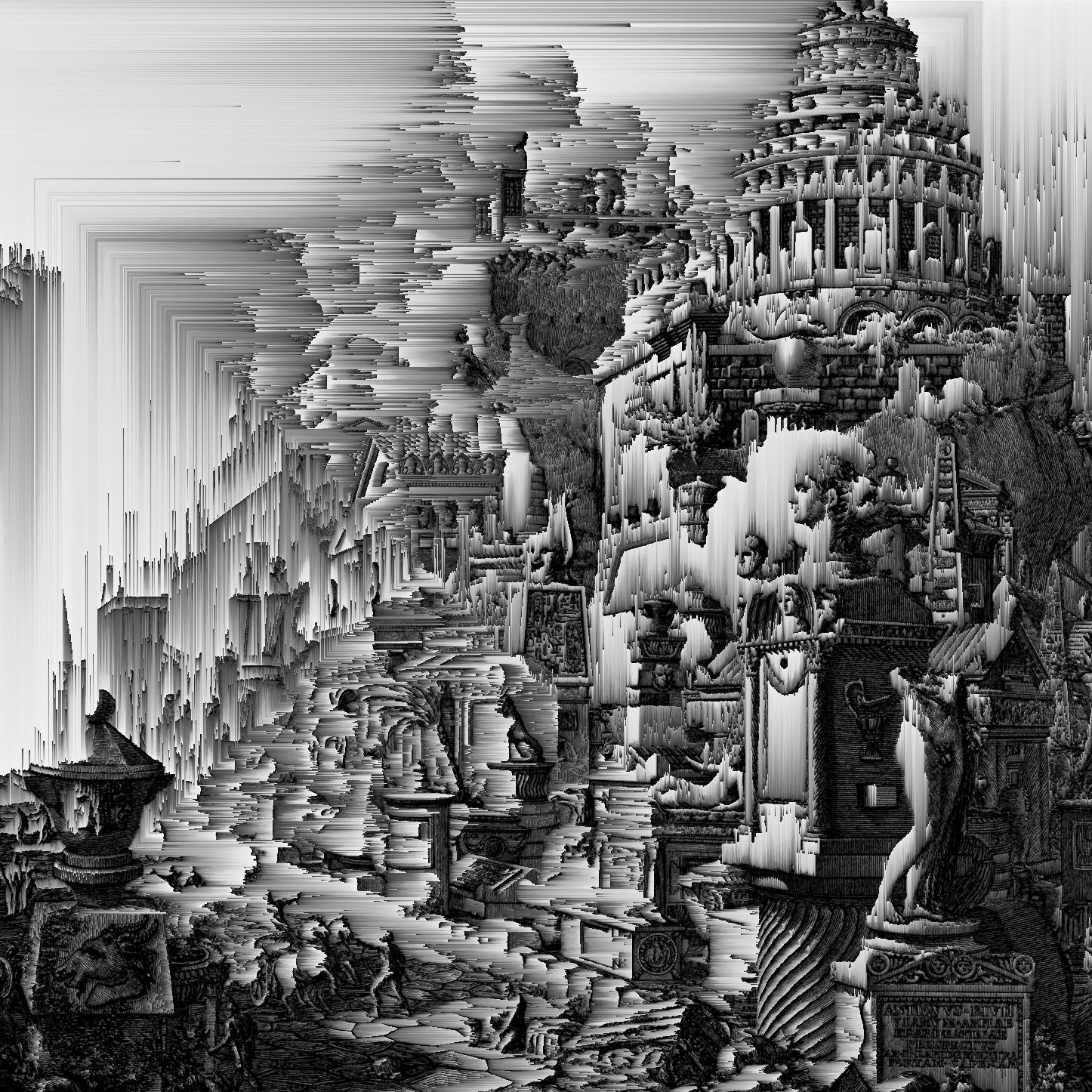
AI was invented by Alberti. The logic that ends with a generative tool producing code-compliant floor plates begins with the first systematic attempt to abstract architectural knowledge from the body of the master builder and encode it in transmissible rules. What follows across five centuries is not a series of disruptions but a single continuous process, each stage transferring more cognitive work from the architect to the system, each transfer experienced as progress, none of them accompanied by a serious reckoning with what was being given away. The current AI moment is therefore not an external shock arriving from outside the discipline. It is an internal destiny, and the discipline set it in motion itself.
This is a harder claim than the standard account of AI and architecture, which treats generative tools as a disruption arriving from the technology sector into an otherwise healthy practice. That account is reassuring because it implies the problem is external and therefore survivable through adaptation. The argument here is the opposite: that the discipline’s constitutive act, the move that made it a discipline, contains the logic of its own obsolescence. Architecture didn’t build AI. It demonstrated, across five centuries, that the kind of knowledge humans use to make environments can be progressively abstracted from the body, encoded in rules, and transferred to systems that execute those rules without the person who originally held them. That demonstration is not a cause of AI but a structural anticipation of it — and the building industry is now one of the cleaner examples of a domain where that logic has run close to completion. Understanding it is the precondition for knowing what architecture actually is, what it has always been beneath the buildings, and where its intelligence needs to go now that the buildings can no longer contain it.
The First Abstraction
Before Alberti, architectural knowledge lived in the body of the master builder. It was trained perception, craft intuition, accumulated judgment that couldn’t be fully separated from the person who held it or the tradition that formed them. The Gothic cathedral builders had spatial intelligence of an extraordinary order, but it was local, embodied, transmitted through apprenticeship and practice rather than through texts or principles. It couldn’t travel easily, couldn’t be applied to radically new problems without long periods of re-apprenticeship, couldn’t be taught to someone who hadn’t spent years inside the material and structural conditions that produced it.
Alberti’s project in De Re Aedificatoria was precisely to change this. To abstract architectural knowledge from the body, extract it from craft tradition, and encode it in transmissible principles available to anyone who could read. That was a genuine intellectual achievement of the first order, and it was also the first act in a long sequence of deskilling. The moment you write the rule down, you begin the process of making the person who knew it intuitively redundant. Not immediately, not completely, but directionally and without reversal. The systematized portion of the knowledge becomes available to whatever executes systems most efficiently, and that executor changes across history while the logic remains constant.
The Transfer of Cognition
The sequence that follows has an almost mechanical regularity. Vignola reduces the orders to reproducible templates, transforming a living compositional language into a selection menu. The Beaux-Arts system turns design into a learnable method, codifying spatial sequence and program distribution into teachable schemas that produce competent architects reliably and original ones only accidentally. Modernism, for all its revolutionary self-presentation, systematizes more aggressively than anything that preceded it: space planning becomes a rationalized science, structural logic becomes explicit and calculable, the ornament that once required a craftsman’s judgment is eliminated in favor of surfaces that industrial production can handle without remainder. Each of these moves is genuinely progressive. Each transfers more cognitive work from the architect to the system.
Building codes complete the first phase of this logic. What began as minimal safety requirements grew across the twentieth century into exhaustive constraint systems that pre-decide enormous ranges of formal and organizational choice before the architect touches the project. Accessibility requirements, fire egress logic, structural spans, energy performance envelopes: each is legitimate in isolation and collectively they constitute a design brief that arrives already largely resolved. The architect inherits a solution space that has been dramatically narrowed by the time the first sketch is made, and the narrowing is invisible because it arrives dressed as professional responsibility.
Software accelerates the process in a specific and revealing way. CAD initially seemed like pure liberation, faster drawing and easier iteration, but it encoded assumptions about how buildings are assembled and what the standard components are. Revit is the fullest expression of this logic: a parametric environment that models buildings as assemblies of manufacturer-defined components with fixed dimensional and performance properties, connected by rules that reflect how the construction industry actually works. It is an extraordinary coordination tool and simultaneously a system that makes certain thoughts easy and certain thoughts nearly impossible, and the thoughts it makes nearly impossible tend to be the ones that depart most radically from existing building conventions. The software doesn’t just represent architecture. It becomes the medium in which architecture is conceived, and the medium has its own conservative agenda that operates below the threshold of conscious choice.
Standardization of parts closes the loop. When curtain wall systems, structural grids, mechanical equipment, and floor assemblies all come in fixed dimensional increments with established performance characteristics, design becomes increasingly a matter of selection and combination rather than invention. The range of what can be built without enormous cost premiums contracts steadily, and with it the range of what gets seriously considered. By the time AI arrives, the cognitive work that architects actually perform on most projects, the iterative optimization of floor plates, the resolution of structural and code conflicts, the coordination of consultant inputs, the production of construction documents, has already been so thoroughly systematized that automating it is less a creative leap than a mechanical completion. AI does not introduce a new logic. It executes the existing logic at a scale and speed that makes the human role in it difficult to justify.
The consequences are concrete. The housing stock, the commercial interiors, the logistics facilities, the incremental renovations — the overwhelming majority of what gets built — does not require an architect once generative tools can optimize for code compliance, functionality and structural integrity. What remains, if the discipline does not move, is luxury differentiation: architects as brand assets for developers, signature forms as status signals, the very tip of a collapsing pyramid. That is not a future worth defending, and it is not an accident. It is the destination the sequence was always heading toward.
The Double Bind
What makes this a double bind rather than simply a loss is that every stage of the sequence was genuinely progressive. More buildings built more safely for more people. Knowledge made transmissible across geography and time. Practice made teachable without decades of apprenticeship. Coordination made possible at a complexity that craft traditions could never have managed. The systematization was a real gain and a real erosion simultaneously, inseparably, and the discipline never developed the conceptual tools to hold both things in view at once.
Instead, at each stage of contraction, the loss of ideation space was renarrated as sophistication: code compliance became professional responsibility, BIM became integrated practice, standardization became buildability. The discipline developed a remarkable capacity to describe its own deskilling as progress, and this is precisely what Mark Fisher’s Capitalist Realism names: not cynicism but the deeper foreclosure that makes alternatives literally unthinkable from inside a system that has learned to present every contraction as an advance. Architecture couldn’t see what was happening to it because it had already adopted the language that made the happening look like something else.
The Remainder
The question the discipline never asked seriously enough is: what is the cognitive work that cannot be systematized without remainder? What lives in the gap between the rule and the situation, the judgment that the rule was written to approximate but that only a trained spatial intelligence can actually perform? That remainder is real. It shows up in the difference between a building that works on paper and one that produces the experience it intended, between a space that is code-compliant and one that is genuinely inhabited, between an environment that satisfies its brief and one that opens something up in the people who move through it. The discipline knew this remainder existed and called it intuition, or talent, or poetry, the categories hardest to institutionalize and therefore hardest to defend. It went largely untheorized and therefore largely unprotected, and the sequence continued. The architects who lived most fully in that remainder were celebrated as singular and treated as inexplicable, which was the discipline's way of honoring what it could not use.
Intelligence Leaves the Building
The signal that something was wrong has been visible for decades, in the slow migration of architectural thinking into fields the discipline didn’t sanction. Architects moved into film, into exhibition design, into interactive media, into the design of procedural environments, and the discipline watched them go and called it apostasy rather than recognizing it as the most honest response to a condition we couldn’t yet name. The people who designed the first navigable game environments were often thinking architecturally without the institutional permission to call it that. The vocabulary of level design, circulation, threshold, compression and release, the management of sightlines, is architectural vocabulary that traveled without its passport. The spatial intelligence that the building could no longer fully contain was finding other surfaces to work on.
This migration is the evidence that the intelligence survived the deskilling even when the practice didn’t. The epistemological toolkit that architecture developed across five centuries, the plan, the section, the axonometric, the model, the capacity to think simultaneously at the scale of the body and the scale of the city, the training to read how environments produce experience and behavior, remains intact and remains powerful. It was never really about buildings. Buildings were the most obvious application, the surface on which the intelligence happened to be deployed for most of its history, not the thing the intelligence was for.
New Surfaces
Which means the present moment, for all its difficulty, is also an opening. If the building is no longer the adequate object of architectural intelligence, the question becomes where that intelligence is most urgently needed, and the answer is not hard to find.
The obvious response is to go smaller — to return spatial production to the community, bypass the expert, build with local materials and collective labor, restore the embodied knowledge that abstraction destroyed. This is the degrowth response, and it has genuine intellectual coherence. It has produced real work in specific contexts and its diagnosis of the problem is not wrong. But as a general solution it is a precise form of the foreclosure it believes itself to be escaping. A community self-build project still operates inside zoning codes, still uses standardized components, still exists within an economic system that determines what can be built where and for whom. The embodied knowledge it recovers is real but local and non-transferable. It is the most thorough capitulation to Capitalist Realism available: the imagination so captured by the system that the only alternative it can conceive is a smaller version of what already exists.
The failure of the degrowth response is a failure of scale, but more precisely it is a refusal of the actual problem. What architecture needs to address are not buildings but worlds. Timothy Morton's concept of the hyperobject names part of the condition: phenomena massively distributed in time and space, exceeding any single representation, encountered locally but never seen whole. Climate systems, organizational structures, digital environments, the accumulated spatial logic of cities: these are hyperobjects. But a world is more than a hyperobject. A hyperobject is a condition you inhabit. A world is something you make — partially, provisionally, from inside it, without ever seeing it whole. That is precisely the kind of authorship spatial intelligence was built for, and it is the kind that no retreat to local scale can address. Degrowth retreats to the one scale where the problem feels manageable, which is precisely the scale at which it cannot be seen at all.
Ecological systems operating at planetary scale are spatial problems of existential consequence with almost no design intelligence applied to them. Rewilding corridors, managed coastal retreat, carbon sink infrastructures: these require exactly the capacity to think simultaneously across scales, to model how interventions at one level produce consequences at another, to design systems whose outputs are environments rather than objects. Organizational structures, which have spatial logic even when they have no physical form, remain almost entirely unthought by people trained to think spatially. The interface is a built environment. The procedural environments generated by AI systems, game worlds, simulated spaces, training environments, are becoming the medium of an increasing portion of human experience, and they are being designed with enormous ambition and inconsistent rigor by people working without the vocabulary architecture spent centuries developing.
None of these are metaphorical applications of architectural thinking. They are its direct deployment on surfaces that are currently producing more of human experience than buildings are. The migration has already been happening. What is needed now is for it to become intentional.
What Environments Are For
There is a harder version of this argument that deserves to be taken seriously. Nick Land identifies capital as a self-assembling system with its own teleology, arriving from the future and using human intentions as fuel rather than being directed by them. On this reading the sequence from Alberti to AI is not a series of choices that could have gone otherwise — it is a logic executing itself through the discipline, and what looks like migration or recovery is simply the system finding new surfaces to process. The remainder is not permanent. It is just the not-yet-consumed.
There is no clean refutation of this. The sequence is real and the directionality is real and the acceleration is real. The only answer available is also the most precise one: the question of what an environment is for can only be answered from inside a life. Not exclusively a human life — the science of intelligence and the science of ecology are both expanding what we understand life to include. But from inside a life nonetheless, which is a condition that no system has yet met and that no processing power alone produces. Whether that boundary holds permanently is a question this essay cannot close. What it can say is that the question of flourishing currently has a home that systems do not yet share. And that this is when it needs to be asked.
Architecture, understood at its full depth, is the discipline that asks that question wherever life is present and environments are made. The building was one place to ask it. The world — and everything living inside it — is full of others. And the question is worth asking regardless of what the system eventually does with the answer.
Notes
On Alberti. De Re Aedificatoria (1452) is the founding act of architectural systematization. Alberti was not a builder — he was a humanist scholar. The first person to abstract architectural knowledge from the body was someone who never got his hands dirty, which is perhaps not a coincidence.
On the deskilling sequence. Harry Braverman’s Labor and Monopoly Capital (1974) is the foundational account of deskilling as a structural feature of industrial capitalism. The systematic separation of conception from execution is capital’s primary mechanism. Architecture is a clean case study because the sequence is so long and so legible.
On the remainder and the world. Lefebvre’s The Production of Space (1974) argues that spatial knowledge always exceeds its technical encoding. The degrowth tendency that follows from him correctly identifies the social production of space as the site of resistance but misidentifies the scale at which resistance is possible. Timothy Morton's hyperobject — phenomena massively distributed in time and space, encountered locally but never seen whole — names the scale and complexity of the problems spatial intelligence now needs to address. But a world, as this essay uses the term, is more than a hyperobject. Morton describes a condition. A world is that condition taken as a design problem: something to be made partially, provisionally, from inside it, without ever seeing it whole. The argument here is that spatial intelligence is the discipline equipped to act.
On Fisher. Capitalist Realism (2009) applies wherever a system has foreclosed on its own alternatives. The degrowth response is perhaps its clearest architectural expression: the imagination so captured by the system that the only alternative it can conceive is a smaller version of what already exists.
On machine intelligence and life. Blaise Agüera y Arcas's What is Intelligence? argues that intelligence, including something like experience, is an emergent property of sufficiently complex information processing systems rather than a special property of biological substrates. The closing argument of this essay takes that seriously. Humans are one form of life among others for whom environments are significant. If that circle widens, the argument extends.
On Land. Fanged Noumena (2011), particularly Machinic Desire and Meltdown. The accelerationist diagnosis deserves engagement on its merits. The disagreement here is not with the diagnosis but with the conclusion — and whether the remainder is permanent or merely the not-yet-consumed is a question this essay leaves open because it is genuinely open.
A profound and, frankly, haunting diagnosis of the frustration many of us feel. Your reframing of AI as an 'internal destiny' rather than an external shock resonates deeply. Spending 500 years perfecting the abstraction of the building, only to find ourselves boxed in by the very rules written to 'liberate' the craft.
This is a vital read for those of us standing on the periphery, in a state of nostalgia, looking out onto these 'new surfaces' while still clinging to the charm of the title 'Architect', with a certain sense of infidelity in being tempted to use that architectural intelligence elsewhere: outside the act of building.